Resources for participants
On this page, you will find many of the resources required to participate fully in ViP—and more.
Readings
- VCoL page
- IP and accreditation
- Everyone should have the opportunity to develop optimally
- VCoL in action: Learning the way our brains are designed to learn
- Learning, emotion, & the Goldilocks Zone
- VCoL in action: How to use micro-VCoLs™ to learn optimally on the fly
- VCoL in action: The many benefits of micro-VCoLing™
- VCoL in action: The active observer
- VCoL in action: The micro-VCoL™ starter set
- Micro-skills & micro-VCoLs
- Mindset, emotion, and learning
- Clarifying questions—what they are & why you should know how to ask them
- VCoL in action: skill mapping
Micro-VCoLing macro-skills
There are many ways to cluster skills. The following list is organized by skill categories. We do not claim that it is the “correct” way to look at micro-VCoLing skills, but it can be useful.
- Awareness skills
- Listening skills
- Attention skills
- Skill detection skills
- Goldilocks Zone detection skills
- Action skills
- Reflecting skills
Micro-VCoLing skills map
Another way to organize micro-VCoLing skills is around the micro-VCoL's Set, Seek, Apply, and Reflect steps.

Micro-VCoL Maker
ViP is designed to help you begin the process of habituating the basic set of VCoLing skills we all need to become effective life-long micro-VCoLers. The Micro-VCoL Maker will allow you to create customized VCoLs like the one shown below. These training Micro-VCoLs are stripped down to basics to help you build skill quickly and effectively. We'll be showing you how to use the Maker in Meeting 1.
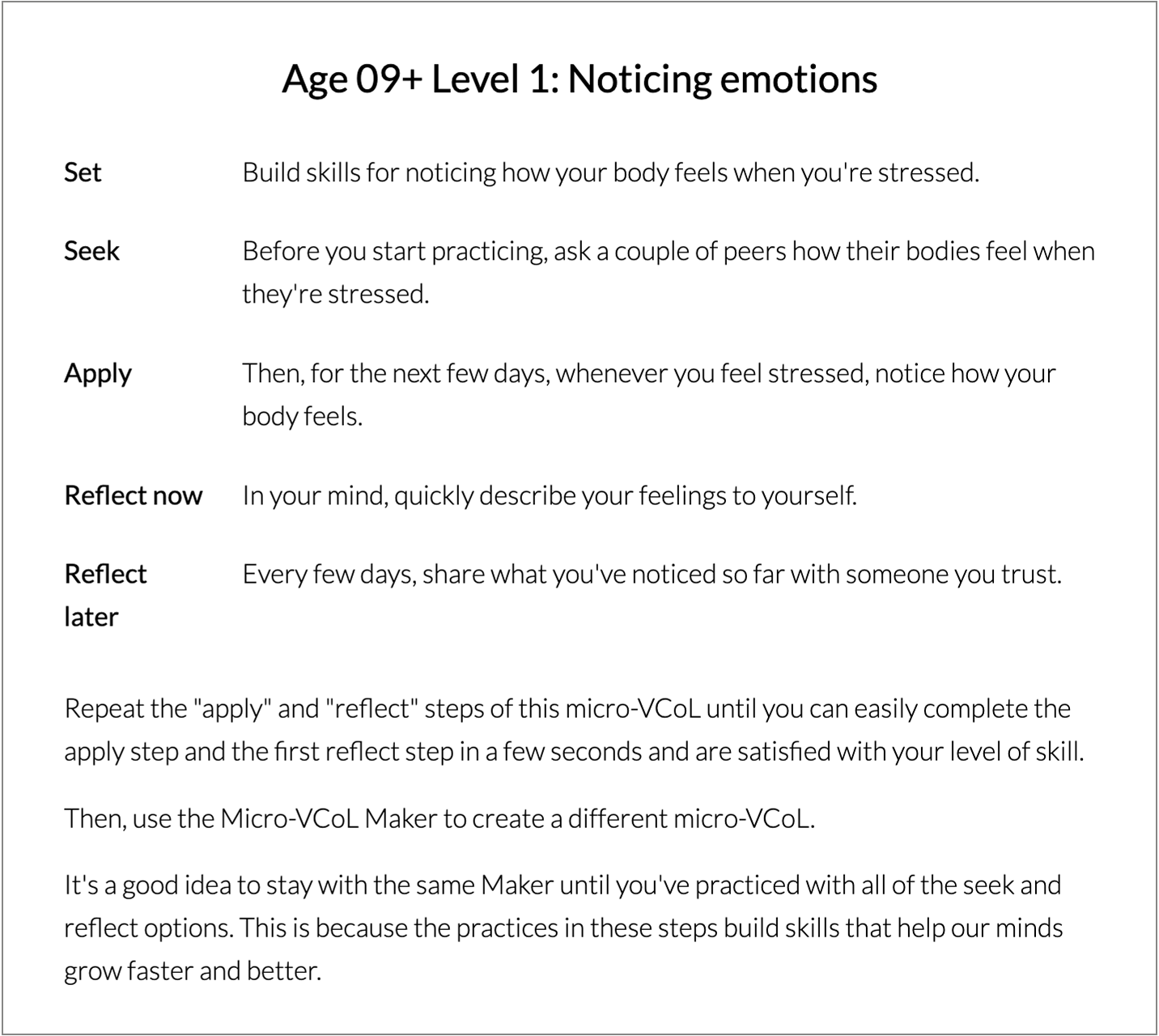
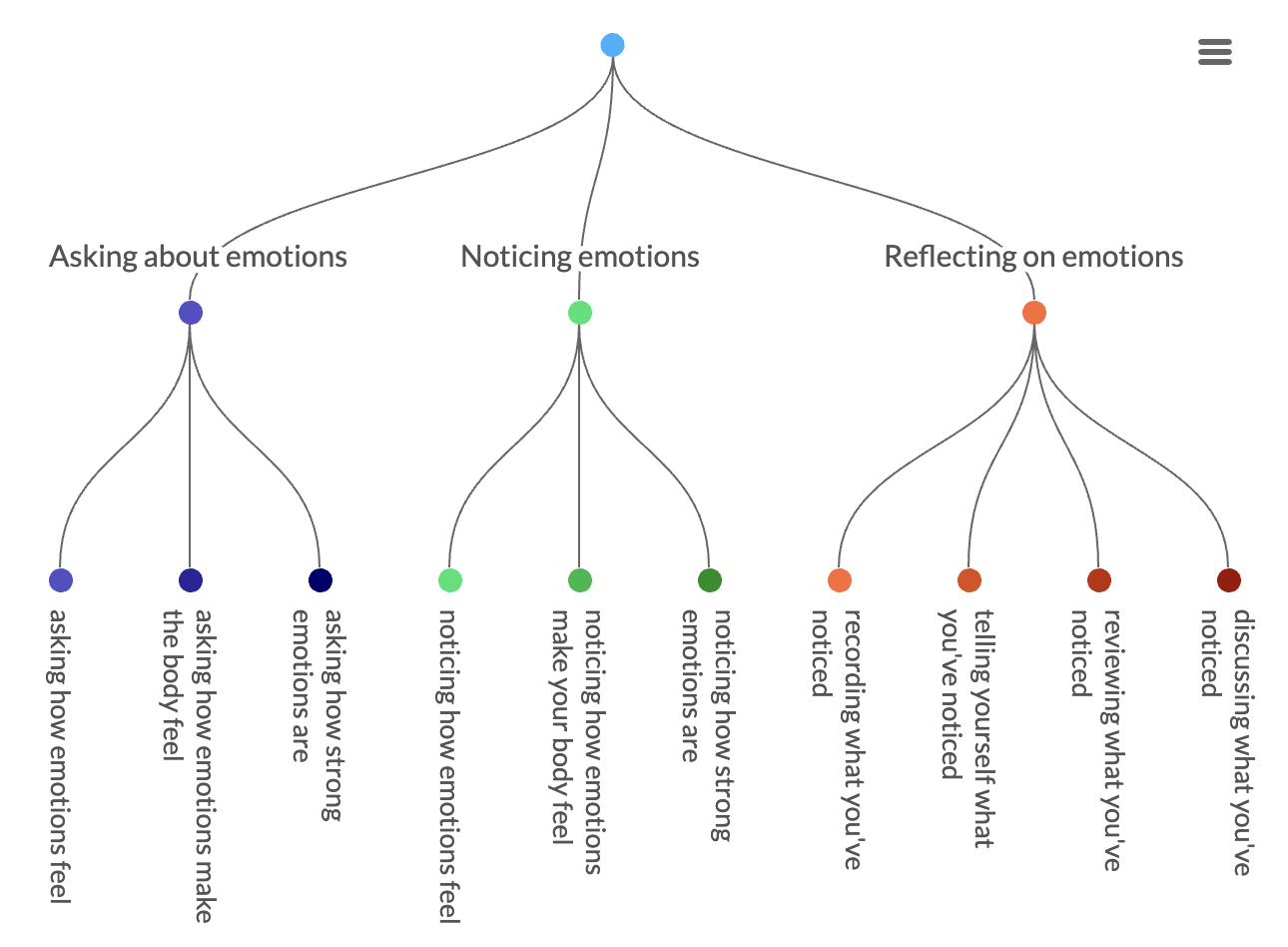
The skill map below shows the micro-VCoLing skills targeted by the Noticing Emotions Micro-VCoL maker. The micro-VCoL above targets a subset of these skills.
MindLog™ reflections
As part of ViP, you will be writing six 15–20 minute reflections. The MindLog subscription you received as part of ViP includes 50 entries. We hope you will continue using MindLog to reflect on your learning after the course has ended. You can even keep sharing your entries with the other Vippies in your cohort if you choose to do so. MindLog comes with a set of short documents that discuss the different components of MindLog and how they can be used to support your mental development. These include:
- MindLog™ for Educators: What's it all about?
- About MindLog for adults
- About MindLog for educators
- MindLog growth charts
- MindLog reflections
- MindLog prompts
- Writing MindLog comments
- Setting MindLog microtasks
- What PISA measures. What we measure.